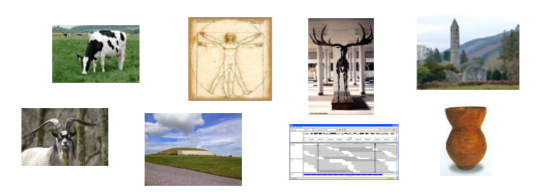
1. Next generation sequencing of ancient domesticate genomes:
Ancient DNA (aDNA) research allows changes in the genomes of organisms to be studied over archaeological time-scales. Using next generation
sequencing technologies we are re-sequencing both the mitochondrial
and targeted regions of the nuclear genome of multiple domesticate
species (Cow, Sheep and Goat). Results from this analysis have the
ability to inform on the effects of domestication on these species.
2.Anthropology: the origins and spread of modern humans during the Late Pleistocene.
This project which is led by Ron Pinhasi and is carried out in collaboration with leading European scientists, investigates the evolution and nature of major prehistoric processes which are key to our understanding of what happened in European prehistory.
3. Genetic susceptibility of Tuberculosis:
Bovine tuberculosis (BTB) is a chronic respiratory disease caused by a bacterial infection from Mycobacterium bovis.
Eradication of BTB has been successful in many countries but today both Ireland and the UK are of only the few countries
in Western Europe not to be classified as TB free. The main objective of this lab is to identify genes that regulate the response
of bovine to TB infection. Several approaches are used to achive this.
-The emerging technology of high density SNP genotyping chips in elite sires from Irish cattle with high quality phenotypes will be emploied. This data will be used to sequentially map important biomedical traits using composite parameters derived from offspring measurements which are available in the national cattle databases. This will result in
significantly associated genome regions and of particular interest will be tuberculosis susceptibility.
-Sequence statistic, eg based on allele frequency spectra, frequency of ancestral variants, will be used to test in candidate genes the differences in TB resistance between reactor (diseased) and non-reactor animals.
4. Genetics of Motor Neuron Disease:
Amyotrophic lateral sclerosis (ALS) is a progressive neurodegenerative disease effecting ~2 people per 100,000 every year.
About 10% of patients display a family history of ALS, and numerous rare mutations in several genes have been demonstrated to
segregate with the disease.
Our work is centered on uncovering the role played by genetics in the condition within the Irish population.
Advances in DNA sequencing based technologies provide the opportunity for significantly larger scale interrogation of the genomes
of ALS patients for disease relevant variation and our approach is centered on exploiting these technologies in combination with the
growing understanding of both ALS pathobiology and normal biological processes. This project is co-supervised by Prof. Orla Hardiman.
|